Mushroom farming consultant · Azamgarh, Uttar Pradesh
Atul Maurya tells you which mushroom to grow, what to set up, which tools and machines you really need, and where to sell for the best price, in India and abroad.
Advice only. Atul doesn’t sell seeds or machines, so he’ll tell you what to buy, and what to skip.
Cropping room16–18°C · 85–90% RH
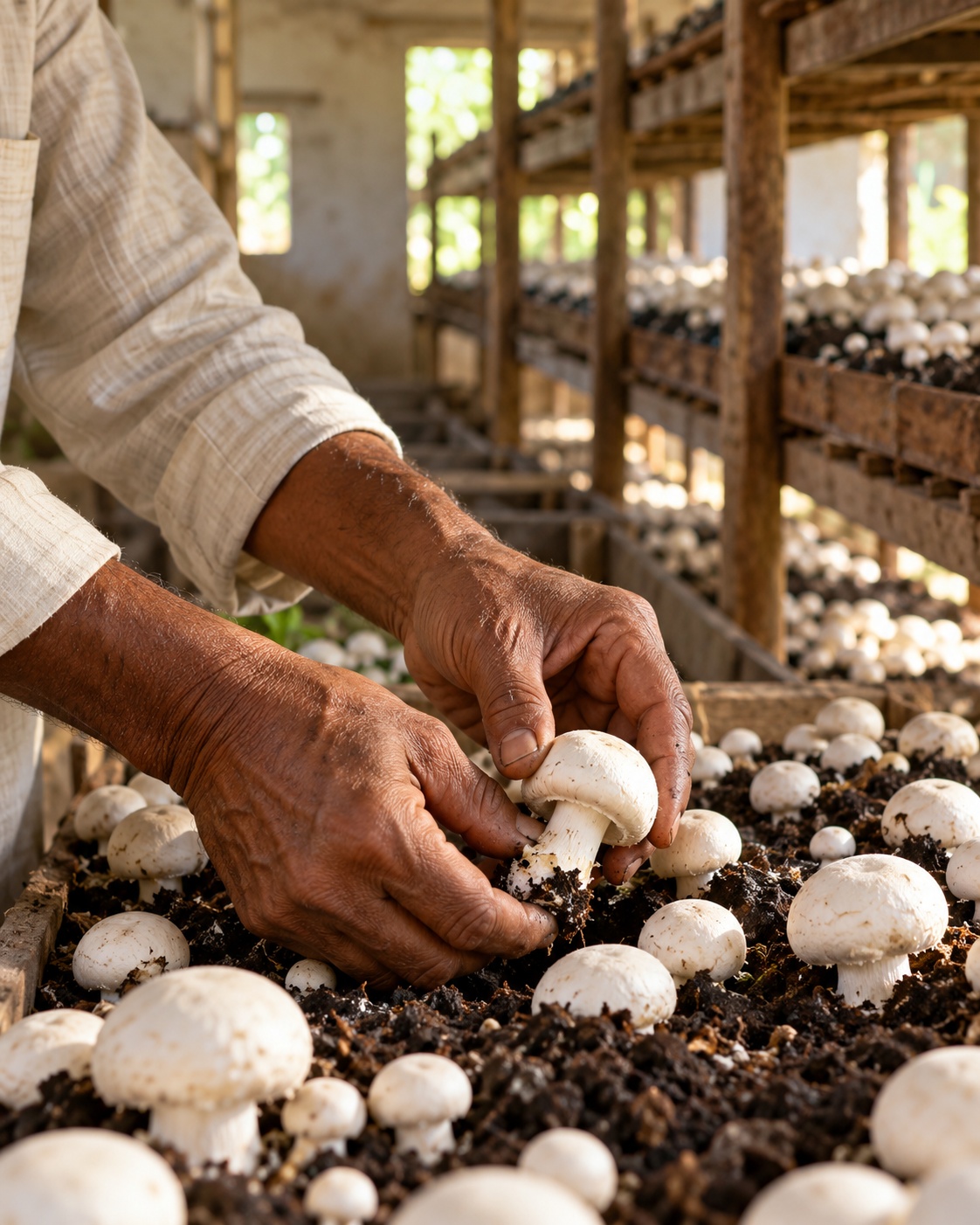
White buttonFirst harvest in ~5 weeks
What Atul advises on
Every farm is different. These are the six things people ask about most, and where fifteen years of mistakes and harvests count.
Variety & season
Button in winter, milky or paddy straw in the heat, oyster almost all year. Atul matches the variety to your district's temperature, your space and your budget, so your first crop isn't a gamble.
Setup, tools & machines
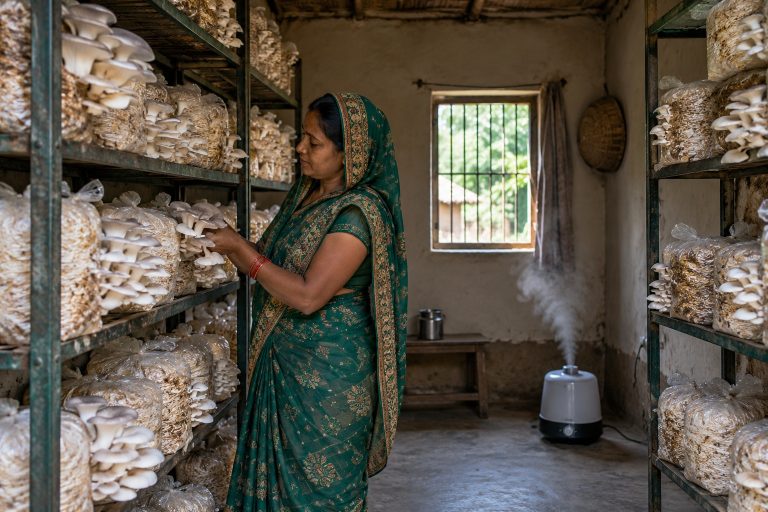
A bamboo shed or an AC room, racks, humidifier, thermometer, pasteurisation setup. You get a clear list of what's needed for your size, what can wait, and what not to waste money on.
Growing & crop care
Green mould, flies, weak pinning, low yield. Most problems come from temperature, humidity, fresh air or compost. Atul has seen them all and tells you what to change, step by step.
Selling in India
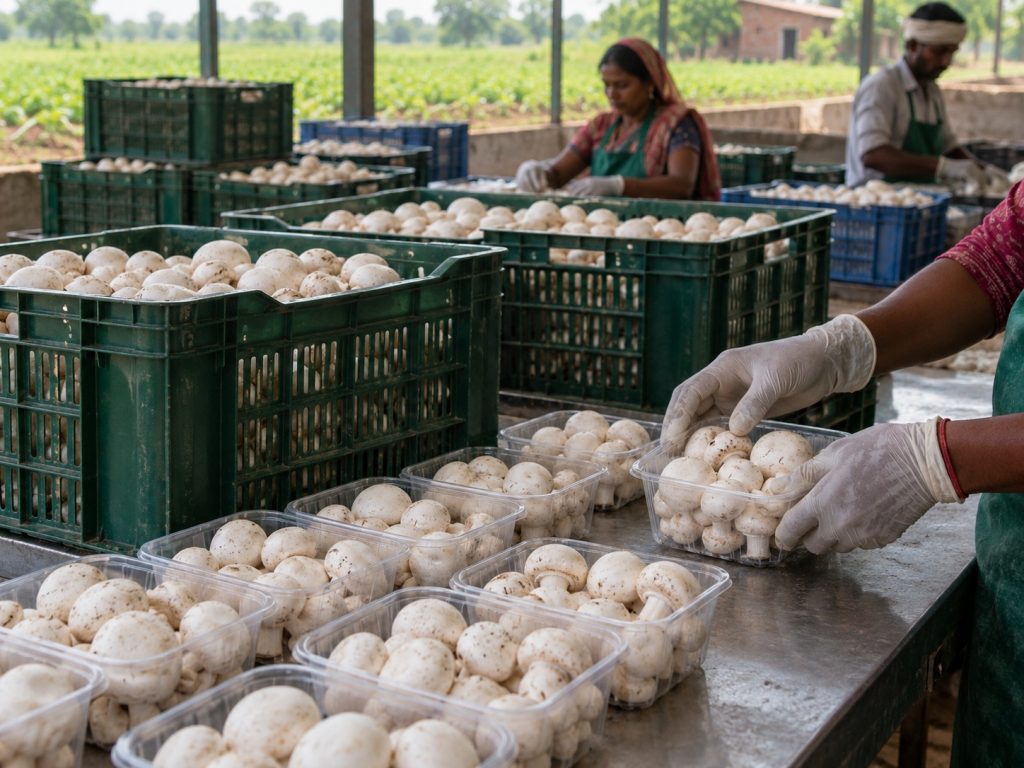
Which mandi, which hotels and restaurants, which supermarkets, and what time of year rates are highest. How to grade and pack so buyers don't push your price down.
Export
Which countries are buying which variety, and in what form: fresh, dried or processed. What quality and packing they expect, and how to reach the buyers who pay more.
Buy-back
If you're growing good quality in good quantity, Atul buys mushrooms directly from growers and supplies them onward to restaurants and export buyers.
Grow sheet
The right variety depends on your temperature first. Button needs the cool of a UP winter or an AC room; milky and paddy straw like the summer heat. Here’s how the main commercial and medicinal mushrooms compare.
| Variety | Cropping temperature 10°15°20°25°30°35°40° | First harvest | Who buys it |
|---|---|---|---|

White buttonAgaricus bisporus |
15–22°C | 5–6 weeks | Mandis, hotels, supermarkets. India's biggest seller. |

Oyster (Dhingri)Pleurotus spp. |
20–30°C | 3–4 weeks | Fresh markets; dries well for powder makers. Easiest for beginners. |

MilkyCalocybe indica |
25–35°C | 5–6 weeks | Local markets and restaurants. Keeps longer after harvest. |
Paddy strawVolvariella volvacea |
28–36°C | 12–15 days | Fast-moving local demand. Grown on rice straw. |

ShiitakeLentinula edodes |
15–25°C | 2–4 months | Premium hotels and export. Sells at several times button rates. |
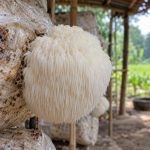
Lion's maneHericium erinaceus |
18–24°C | 4–6 weeks | Health food and supplement makers. |

ReishiGanoderma lucidum |
25–32°C | 2–3 months | Herbal and wellness companies, mostly dried, often export. |
Temperatures are for the cropping room, and harvest times are counted from spawning. Both are typical figures; your plan will use your own conditions.
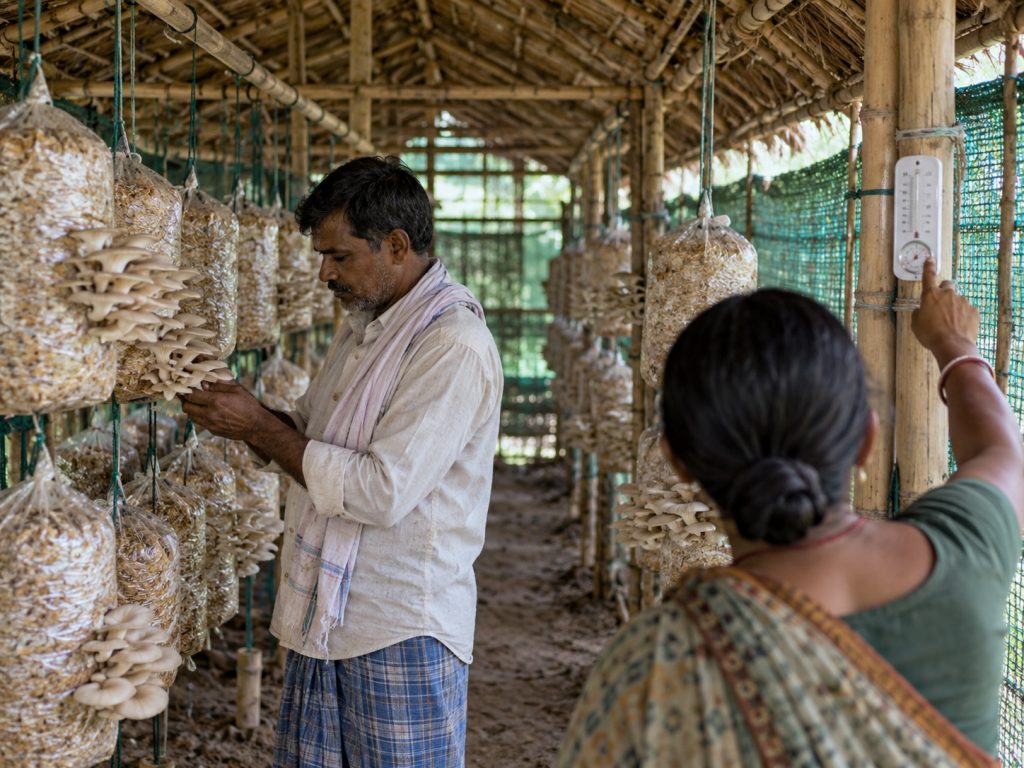
How a consultation works
You don’t need any experience to start. Atul walks you through each stage, on your farm or over the phone, until your first crop is sold.

Tell Atul your district, how much land or room you have, your budget, and what you want to grow.
He visits your farm, or walks through it with you on video: space, water, power, shade, local weather.
Which variety for which season, the right shed, the exact equipment list, and what it should cost.
Spawning, temperature, humidity, watering, disease, harvest. Help on call and on site as the crop grows.
Who to sell to, how to pack, when rates are best, and the export route. Buy-back if you have the volume.
Selling & export
Plenty of farmers grow a good crop and then sell it cheap, because they don’t know who’s buying. Atul has spent fifteen years on the selling side too, and shares what he knows about markets.


About Atul Maurya
Atul Maurya started growing mushrooms in Tiwaripur village, Azamgarh, fifteen years ago. He has built a business from it, crop by crop, and learned the hard parts the hard way: failed batches, bad buyers, rates that crash in a glut.
Today, through S.R.A. Agro, he advises farmers and landowners who want to earn from mushrooms. His team works with growers online across India and on site at their farms, and has good links with the agriculture department.

Small start
500–1,000 sq ft
A spare room or a low-cost bamboo shed. Good for learning with oyster or milky before you scale.
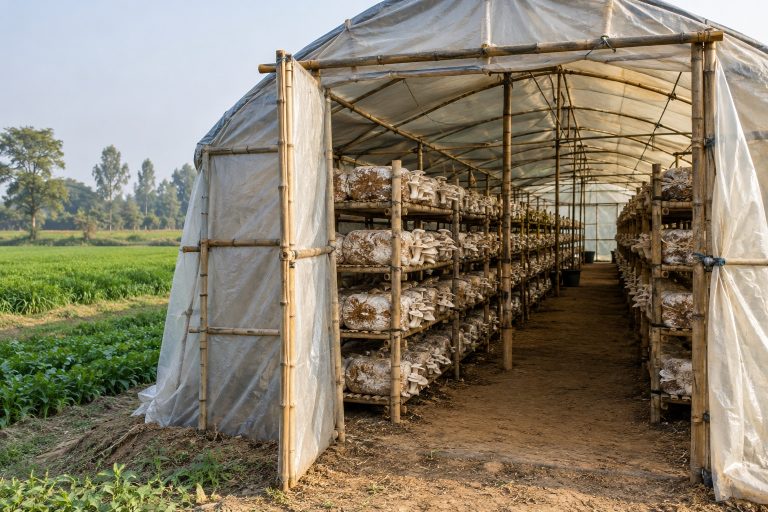
Steady income
2,000–5,000 sq ft
A proper shed with racks and climate control for crops month after month.
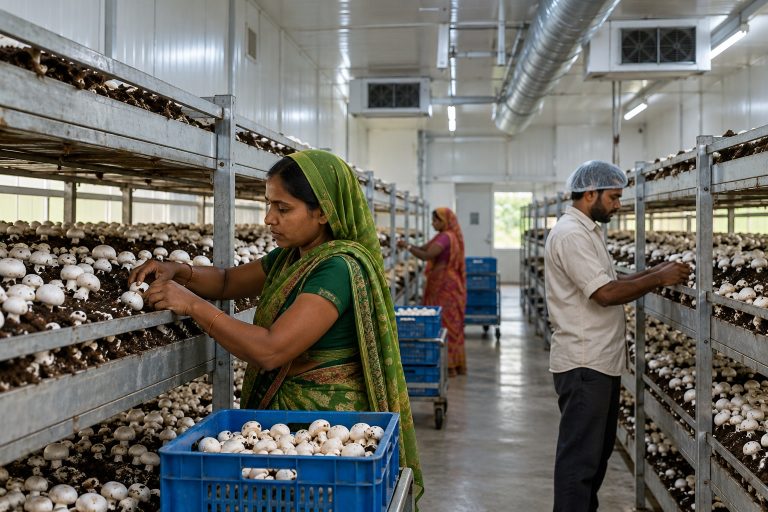
Commercial unit
1 acre and above
Climate-controlled rooms for button mushroom all year, with bulk supply and export in mind.
Questions
No. Atul is a consultant. He tells you what to buy, how much, and from where, and what to avoid. Since he isn't selling you anything, the advice is about what works for your farm.
Yes. Most people who call have never grown a mushroom. Oyster or milky in a small room is a common first crop, and Atul guides you through it from day one.
Yes, Atul and his team visit farms in person. If you're far away, the review and the guidance happen on phone and video call, wherever you are in India.
If the quality is good and the quantity is worth collecting, yes. Talk to Atul about your crop and expected volume before you plant, so the buy-back can be planned.
Yes. Call or message in Hindi or English, whichever is easier for you.
Atul has worked with the agriculture department for years and can point you to the right office, training and schemes for mushroom growers in your state.
Talk to Atul
Share your district, your space and what you’d like to grow. He’ll reply with where to start.